




















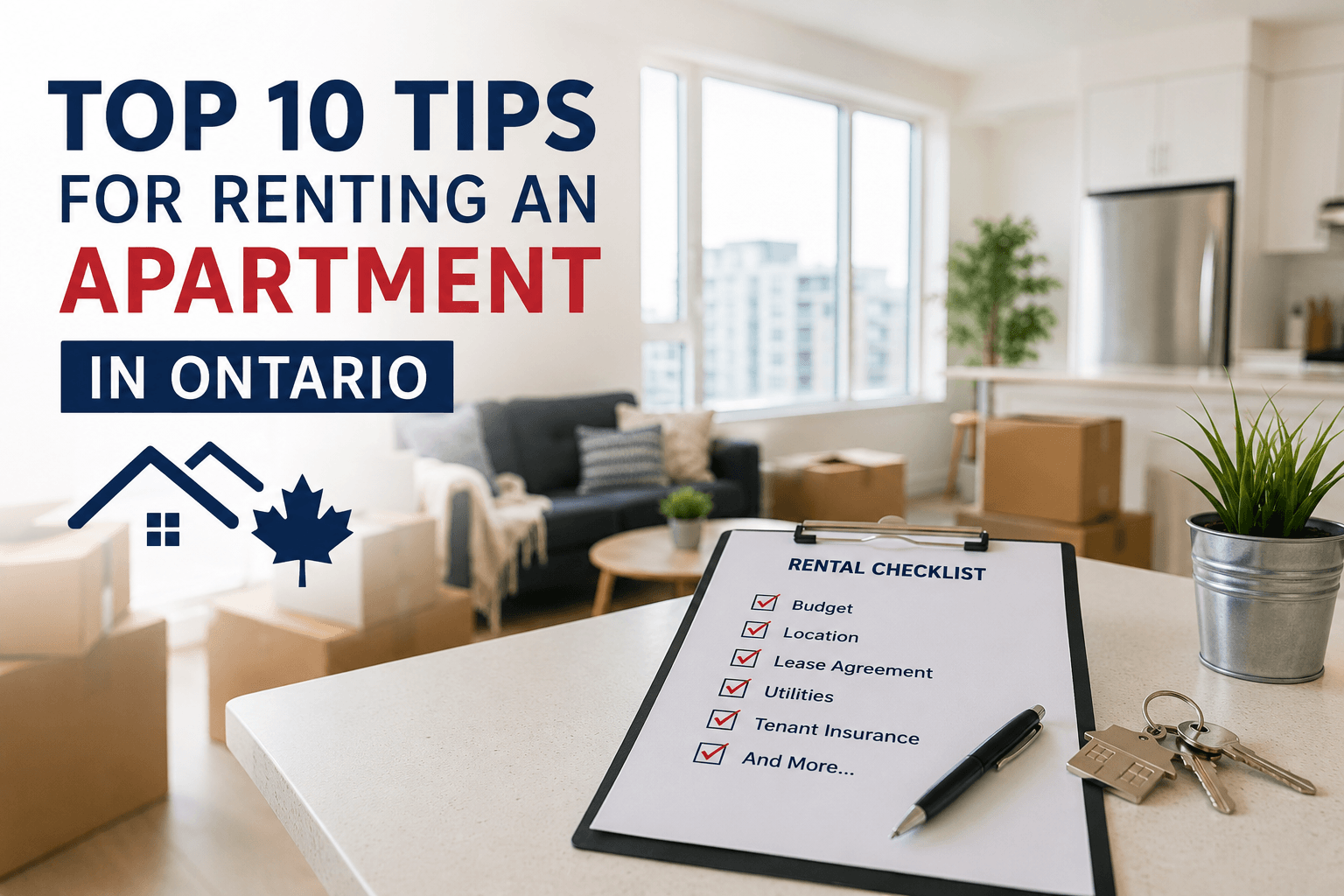
Top 10 Tips for Renting an Apartment in Ontario
Executive Summary: Renting in Ontario can be challenging, but a little preparation goes a long way. This article provides the top 10 tips for Ontario renters, covering budgeting, legal rights, lease rules, application documents, and more. We highlight key Ontario-specific rules – like the mandatory Standard Lease form and deposit restrictions – and direct readers to authoritative sources for details.

1. Set a Realistic Budget and Do Your Homework
Your first step is to set a budget. A common guideline is to spend no more than 30–35% of your gross income on rent. In competitive markets like Toronto and Ottawa, some renters spend closer to 40%, but that leaves less room for other expenses. Don’t forget to include utilities (hydro, gas, internet), which can run $150–$350 per month on top of rent. Research neighborhoods (safety, transit, amenities) before choosing one. Compare average rents: for example, a 2-bedroom in Toronto is roughly $2,400–$2,600 per month. Use the 30% rule to gauge affordability, and start saving for up-front costs (first+last month’s rent deposit, moving expenses).
2. Know Your Rights and Ontario Rental Laws
All Ontario tenants are covered by the RTA. Key rights include security of tenure – a landlord can only evict you by proper written notice and a Landlord and Tenant Board order. It’s illegal for a landlord to simply change locks or force you out without an LTB eviction order. Ontario law requires landlords to use the government Standard Lease form for most residential tenancies. If your landlord doesn’t give you a lease, you can request it; they must provide it within 21 days or you may withhold one month’s rent.
Deposits: Landlords may collect first and last month’s rent (the first month’s payment goes to the first month, and the last month’s rent is held as a deposit towards your final month). However, any other “security” or damage deposit is illegal. Ontario allows only a last-month rent deposit (and a refundable key deposit). Your deposit must only cover the last rental period – landlords cannot use it for other purposes. If a landlord asks for more (e.g. multiple months’ rent or pet deposits), decline and consider reporting it.
Rent Increases: Ontario caps annual rent hikes by guideline. For 2026 the cap is 2.1%. Landlords must give 90 days notice and use the approved form. (Note: some newer buildings may be exempt from rent control.)
Q: “Can my landlord evict me or refuse to renew without reason?” Only for reasons allowed in the RTA (e.g. landlord or family moving in, sale, demolition, etc.) and with proper notice. You cannot be evicted for arbitrary reasons; if you suspect an illegal eviction, you can apply to the LTB.
3. Search Smart: Use Trusted Listings (including Fiva)
Start your apartment search on reputable sites. In addition to Fiva’s rental categories, check well-known platforms like Realtor.ca, Rentals.ca, PadMapper, or local classifieds. On Fiva, browse by location or filter for “Apartments for Rent” in cities (e.g. apartments on Fiva). Always verify listing details: meet the landlord (or property manager), see the unit in person, and never wire money sight unseen. Scams are common in high-demand markets, so be cautious of deals that seem too good or requests to pay before a viewing.
Tip: Many landlords require proof of affordability. They often want to see that your gross monthly income is about three times the rent. Having documents ready (see next tip) helps your application stand out in a competitive market.
4. Prepare Your Documents and Application
Ontario landlords often ask for a rental application with documentation. Before viewings, prepare: government-issued photo ID (driver’s license, passport, etc.), recent pay stubs or an employment letter, and 1–3 references (previous landlord or employer). Having your own credit report ready can speed approval; you can get it from Equifax or TransUnion. You do not have to provide your Social Insurance Number – landlords can run credit checks with basic info (name, DOB). When you visit apartments, bring these documents. This shows landlords you’re organized and serious.
Quick FAQ: “Do I need tenant insurance?” No, it is not legally required, though many landlords strongly recommend or require it in the lease. Renter’s insurance (for personal contents and liability) is relatively inexpensive (as low as ~$25/month) and protects you against fire, theft, or accidental damage.
5. Inspect Carefully & Ask Questions
When viewing an apartment, do a thorough walkthrough. Check the condition of appliances, plumbing, heating, and look for signs of pests or water damage. Test taps and lights. Take photos or videos for your records. Ask the landlord or agent about utilities (are any included?), parking, laundry facilities, and building rules (pets, smoking, guests). Verify the landlord’s identity and contact info.
Quick FAQ: “Can I have roommates or pets?” You can sublet or have roommates with the landlord’s consent (unless the lease forbids it), and most Ontario laws protect your right to a reasonable pet policy. Always check your lease’s terms on this and ask for any clauses to be clarified. Never sign if something seems unusual.
6. Understand the Lease Before Signing
Ontario’s Standard Lease covers the key terms. Read it carefully. It should list rent amount, due date, deposit details, and any agreed services (utilities, parking, etc.). Any lease clause that contradicts law is void. Make sure first and last month’s rent (and any refundable key deposit) are clearly stated. No other upfront fees are legal. If something seems odd, ask the landlord or seek advice before signing. It’s your right to have questions answered.
Also confirm the rent increase policy: the lease may note that rent can only rise by the provincial guideline (2.1% for 2026) unless you agree otherwise in a renewal.
7. Budget for Upfront and Ongoing Costs
Upfront you’ll likely pay first and last months’ rent together (often at lease signing), plus possibly the key deposit (e.g. $50). Renters often underestimate move-in costs. Also budget for moving (truck rental) and any new furniture.
Ongoing, expect utilities (electricity, heat, water, internet) of roughly $150–$350 per month beyond your base rent. Remember tenant (renter’s) insurance: a modest renter’s policy can be as low as ~$25/month. (Note: neither the law nor standard lease forces you to have insurance, but it’s worth considering.) Tenant insurance covers your belongings against fire, theft, or water damage, and provides liability if you accidentally damage the unit.
8. Protect Yourself Against Scams
Always meet landlords or agents in person at the rental. If you see a deal far below market (e.g. “Brand new 2BR downtown $800”), be skeptical. Never pay cash or wire money before signing a lease. Check if the listing appears on multiple reputable sites and verify the address. You can Google Street View to confirm the property exists. Remember: under Ontario law, landlords may only collect first and last month’s rent (and a key deposit), so any strange fee is a red flag.
If someone pressures you to sign or move quickly, that’s suspicious. Take your time and trust your instincts. Your safety and money are important.
9. During the Tenancy: Rights and Responsibilities
Once you’re living there, understand the day-to-day. Pay rent on time (as agreed) and keep records of all payments. The landlord must maintain the unit – Ontario law requires them to make necessary repairs. You have the right to “quiet enjoyment” – meaning the landlord must not unreasonably disturb you (they must give notice before entry, fix things responsibly, etc.). If urgent issues arise (no heat, leaks, pests), put requests in writing. Landlords must respond in a reasonable time.
If conflicts occur, the Landlord and Tenant Board (LTB) handles disputes. For example, if your landlord illegally refuses services or enters without notice, you can apply to the LTB. Conversely, if you’re ever asked to leave unlawfully, remember you cannot be forcibly removed except by official eviction order. Keep copies of the lease, condition photos, and any correspondence as evidence in case you need them.
10. Plan Ahead and Use Fiva’s Platform
Before your lease ends, know your options. You have rights when a landlord sells, and they can’t raise rent beyond the guideline. Decide early if you want to renew or move. Give proper notice if leaving (usually 60 days for month-to-month leases). Consider your next steps well before the end of the lease.
Finally, take advantage of Fiva’s marketplace: when searching or moving, use Fiva to list or find rentals. For example, search apartments for rent on Fiva, or post your rental on Fiva to reach local renters. Fiva’s platform makes it easy to connect landlords and tenants. Start your search on Fiva today and apply our tips to secure the best deal and protect your rights.
Checklist: Quick Renting Guide
- Budget: Aim to spend ≤30% of your income on rent. Save for first+last month’s rent deposit and moving costs.
- Research: Compare neighborhoods (transit, safety) and city rent averages.
- Know the Law: Learn key RTA rules (Standard Lease mandatory, deposit rules, eviction process).
- Use Reputable Listings: Search reliable sites (e.g. Fiva, Realtor.ca) and verify every listing.
- Prepare Documents: Gather ID, pay stubs, bank statements, references before viewings.
- Inspect Thoroughly: During viewings, check condition, take notes/photos, and ask questions.
- Review Lease: Ensure the Standard Lease includes only allowed fees (first/last rent, key deposit).
- Save Receipts: Pay rent on time and keep proof. Document any damage or repair needs in writing.
- Consider Insurance: Decide on renter’s insurance for your belongings (landlord cannot force it.
- Plan Exit: Give proper notice (usually 60 days) if leaving. Know the rent increase guideline (2.1% in 2026)
Tenant Rights & Average Rents by City
| City | Avg. 2BR Rent (approx.) | Notes (RTA covers all) |
|---|---|---|
| Toronto | $2,400 – $2,600 | Standard Lease mandatory; deposit rules apply; rent hikes ≤2.1% in 2026. |
| Ottawa | $2,200 – $2,400 | Ontario RTA applies; same tenant protections and rent guidelines as Toronto. |
| Mississauga | $2,400 – $2,600 | Ontario RTA applies; similarly governed by provincial rent rules. |
| Hamilton | $1,800 – $2,000 | Ontario RTA applies; lower market but same legal framework. |
| London | $1,600 – $2,000 | Ontario RTA applies; example of smaller city rents (subject to update) |